Updated August 2026 | Plumbing | PowerRoute Electric & Plumbing
By PowerRoute Electric & Plumbing
Licensed electrical and plumbing contractor serving Pasadena, Altadena, Glendale, Burbank and the San Gabriel Valley.
Published August 19, 2026. Utility rates, rebate amounts, tax-credit status and code references were verified in August 2026 against the primary sources listed at the end of this guide. Rates and rebate funding change during the year, so confirm current figures before you buy.
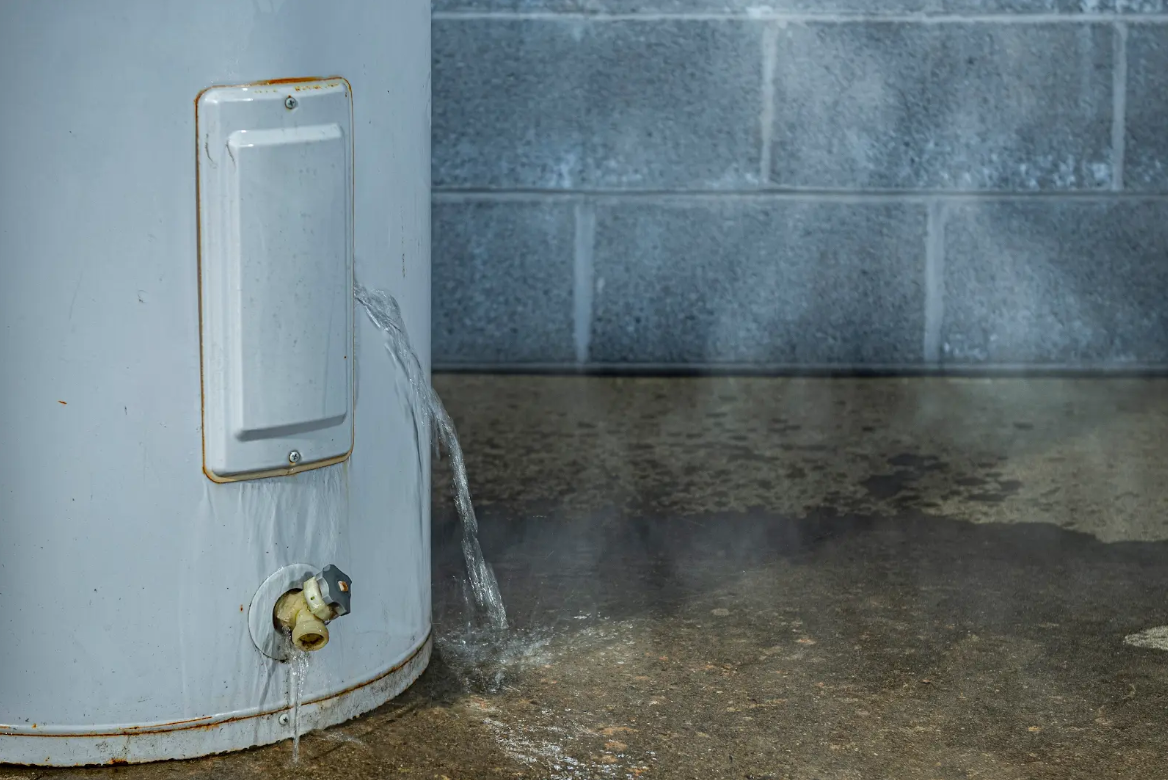
Most people buy a water heater in a panic. The old one leaks on a Sunday, the garage floor floods, and whatever the first available plumber has on the truck becomes the decision.
Twenty minutes of reading gets you a better result. This guide covers the three technologies, how to size each one, what they cost to run at current Southern California rates, what LA County and Pasadena require on the permit, and which rebates survived into 2026.
The short version. On Pasadena, Glendale, Burbank, or LADWP power, a heat pump water heater wins on running cost and rebate money. On Southern California Edison power, a condensing gas tankless unit still costs less to operate. Water heater installation in Los Angeles County requires a permit either way, and the federal 25C tax credit no longer exists.
Or call (323) 616-2829. Free estimate, upfront pricing, licensed for both the plumbing and the electrical.
The Three Options, Side by Side
| Gas storage tank | Gas tankless | Heat pump (hybrid) | |
|---|---|---|---|
| How long it lasts | 8 to 12 years | 15 to 20 years | 10 to 15 years |
| Typical footprint | 20 to 24 in. wide, 5 ft tall | 28 x 18 in. wall unit | 22 in. wide, 6 to 7 ft tall |
| Hot water supply | Limited by tank size | Endless at rated flow | Limited by tank, slow recovery |
| Efficiency (UEF) | 0.58 to 0.70 | 0.81 to 0.96 | 3.3 to 4.1 |
| Bigger gas line needed | No | Usually yes | No |
| Electrical work needed | No | Sometimes (120V outlet) | Usually yes (240V circuit) |
| Best for | Budget replacement, small homes | Two or more baths, long showers | Homes on PWP, LADWP, GWP or BWP power |
Which One Fits Your House
Skip the marketing. Here is the breakdown by household.
One or two people, one bathroom
A 40-gallon gas tank does the job. Tankless pays back too slowly at this usage level, and a heat pump unit needs more space than most one-bathroom condos have. Buy the highest UEF tank you find in 40 gallons and move on.
Three to four people, two bathrooms
The split point. Two showers back to back drain a 40-gallon tank. You have three good paths:
- 50-gallon gas tank. Cheapest install. Reliable. Runs out when two showers overlap.
- Gas tankless. Never runs out. Frees up garage floor space. Costs more upfront and usually needs a gas line upgrade.
- Heat pump, 65 or 80 gallon. Lowest running cost on municipal power. Needs a 240V circuit and open air space.
Five or more people, three or more bathrooms
Go tankless or run two units. A single 75-gallon tank recovers too slowly for a house with morning traffic in three bathrooms. A 199,000 BTU condensing tankless with a recirculation loop handles this load.
Any home with a pool heater, spa, or large soaking tub
Tankless. A 100-gallon soaking tub empties any residential tank.
Sizing: The Numbers, Not the Rules of Thumb
Tanks: use first-hour rating, not gallons
First-hour rating (FHR) tells you how much hot water the unit delivers in one busy hour, starting full. A 50-gallon tank with a strong burner outperforms a 60-gallon tank with a weak one. FHR appears on the yellow EnergyGuide label.
Add up your worst hour:
| Activity | Hot water used |
|---|---|
| Shower | 20 gallons |
| Bath | 20 gallons |
| Shaving | 2 gallons |
| Hand dishwashing or food prep | 4 gallons |
| Dishwasher | 6 gallons |
| Clothes washer | 7 gallons |
Three showers and a load of laundry between 7 and 8 a.m. equals 67 gallons. You need an FHR of 67 or higher.
| Household | Gas tank | Heat pump tank | Target FHR |
|---|---|---|---|
| 1 to 2 people, 1 bath | 30 to 40 gal | 50 gal | 40 to 50 |
| 2 to 3 people, 1 to 2 baths | 40 to 50 gal | 50 to 65 gal | 50 to 60 |
| 3 to 4 people, 2 baths | 50 gal | 65 to 80 gal | 60 to 70 |
| 5+ people, 3+ baths | 75 gal | 80 gal | 75 to 90 |
Notice the heat pump column runs one size larger. Heat pumps heat water slowly. The extra stored volume covers the slower recovery.
Tankless: size by flow rate and temperature rise
Tankless capacity depends on how cold your incoming water runs. Los Angeles groundwater sits around 60 to 68°F most of the year and drops toward 55°F in winter. Target 120°F at the tap. Design for a 60°F temperature rise.
| Home | Burner size | Simultaneous flow at 60°F rise |
|---|---|---|
| 1 bath, 1 to 2 people | 140,000 to 160,000 BTU | 4 to 5 gpm |
| 2 baths, 3 to 4 people | 180,000 to 199,000 BTU | 5.5 to 6.5 gpm |
| 3+ baths or two showers at once | Two 199,000 BTU units in parallel | 11 to 13 gpm |
A modern low-flow shower runs 1.8 to 2.5 gpm. A kitchen faucet runs 1.5 gpm. Add the fixtures you use at the same time, then buy for that number.
Watch for units advertised at 9 or 11 gpm. Those ratings assume a 35°F rise, which never happens in a Pasadena winter. Burner size and parallel units also move the install price, which our breakdown of what a tankless water heater costs installed in Los Angeles prices out scenario by scenario.
Heat pumps: check the room before you check the model
A heat pump water heater pulls heat out of the surrounding air. Manufacturers require roughly 700 to 1,000 cubic feet of air space, or ducting to bring air in. A 10 x 12 garage with a 9-foot ceiling clears the bar. A sealed interior closet does not, unless you duct it.
Two more requirements people miss:
- The unit exhausts cool, dry air. Fine in a garage. Uncomfortable in a hallway closet next to a bedroom.
- The unit produces condensate. You need a drain or a condensate pump.
What UEF Means and Which Number Matters
Uniform Energy Factor replaced the old Energy Factor rating in 2017. UEF measures total energy in versus useful hot water out over a standard 24-hour test, including standby losses.
Read UEF this way:
- Below 1.0 means the unit burns fuel and loses some. A gas tank at UEF 0.64 wastes 36 percent.
- Above 1.0 means the unit moves heat instead of making heat. A heat pump at UEF 3.5 delivers 3.5 units of heat per unit of electricity.
One trap. UEF ratings only compare within the same draw pattern bin. Every unit is tested at Very Small, Low, Medium, or High draw. A 40-gallon tank tested at Low and an 80-gallon tank tested at High are not directly comparable. Match the draw bin to your household before you compare two numbers.
For gas storage, 0.64 UEF is the floor for most SoCalGas rebates. Best-in-class gas tanks reach 0.70. Condensing gas tankless units reach 0.93 to 0.96. Heat pumps run 3.3 to 4.1.
What Each One Costs to Run in Southern California
Here is real math instead of vague claims.
Assumptions: 60 gallons of hot water per day, incoming water at 60°F, output at 125°F. Delivered heat works out to about 119 therms, or 3,478 kWh, per year.
Rates used: SoCalGas bundled residential average of $2.08 per therm, effective January 1, 2026. Pasadena Water and Power at roughly $0.21 per kWh. Southern California Edison at 34.5 cents per kWh, the average residential rate effective January 1, 2026.
| Water heater | Efficiency | Annual energy | Cost on PWP power | Cost on SCE power |
|---|---|---|---|---|
| Gas tank, standard | UEF 0.64 | 186 therms | $385 | $385 |
| Gas tank, high efficiency | UEF 0.70 | 170 therms | $355 | $355 |
| Gas tankless, non-condensing | UEF 0.82 | 145 therms | $300 | $300 |
| Gas tankless, condensing | UEF 0.93 | 128 therms | $265 | $265 |
| Electric resistance | UEF 0.92 | 3,780 kWh | $795 | $1,305 |
| Heat pump | UEF 3.5 | 994 kWh | $210 | $345 |
| Heat pump, best in class | UEF 4.0 | 870 kWh | $185 | $300 |
Three conclusions fall out of the table.
Never install plain electric resistance in Southern California. At SCE rates a resistance tank costs more than three times what a gas tank costs to run. Replace resistance with a heat pump every time.
On municipal power, heat pumps win outright. A Pasadena homeowner saves roughly $175 a year against a standard gas tank and about $55 a year against a condensing tankless, with no gas combustion in the garage.
On SCE power, condensing tankless wins on running cost. A heat pump at $345 a year still beats a standard gas tank at $385, but a condensing tankless at $265 beats both. If your meter says SCE, pick on space, hot water supply, and upfront cost rather than on operating cost alone.
Rates move. PWP approved a 7 percent system average increase in March 2026 with further steps scheduled for October 2026 and March 2027. Gas rates reset with each CPUC filing. Treat the table as a snapshot of early 2026, not a ten-year forecast.
One more factor. Dropping gas service entirely removes the SoCalGas monthly service charge from your bill. Keeping a gas range or gas furnace keeps that charge. Run the numbers on your whole gas bill, not the water heater alone.
Your Electric Utility Changes the Answer
PowerRoute works across four different electric utilities. Rebates and rates differ in each one, and the answer to “should I go heat pump” changes with the territory.
| Your city | Electric utility | Gas utility |
|---|---|---|
| Pasadena | Pasadena Water and Power | SoCalGas |
| Glendale, Montrose | Glendale Water and Power | SoCalGas |
| Burbank | Burbank Water and Power | SoCalGas |
| Los Angeles, Van Nuys, North Hollywood, Studio City, Encino, Sherman Oaks, Highland Park, Eagle Rock, Sunland, Tujunga, Panorama City, North Hills | LADWP | SoCalGas |
| Altadena, Arcadia, San Marino, La Cañada Flintridge, South Pasadena, Alhambra, La Crescenta | Southern California Edison | SoCalGas |
Municipal utilities (PWP, GWP, BWP, LADWP) price electricity well below SCE, and three of the four pay larger heat pump rebates than any SCE program. If your meter says one of those four, a heat pump water heater is the strongest choice available. If your meter says SCE, gas remains competitive.
Check your bill before you shop. The utility name is printed at the top.
Lifespan, and When Repair Stops Making Sense
Pasadena water averages 12.9 grains per gallon of hardness, which PWP classifies as very hard. Hard water shortens water heater life, and our guide to how long water heaters last covers the hardness numbers and the warning signs in the order they show up. Scale coats the bottom of a gas tank and insulates the burner from the water. Scale coats the heat exchanger in a tankless unit and chokes flow.
Expect these service lives locally:
- Gas tank: 8 to 12 years. Closer to 8 with no anode rod service.
- Gas tankless: 15 to 20 years, with annual descaling. Under 10 years without.
- Heat pump: 10 to 15 years.
Repair it if
- The unit is under 8 years old and the tank is dry.
- The failure is a thermocouple, gas valve, thermostat, heating element, or T&P valve.
- The repair costs less than a third of a replacement.
Replace it if
- Water is coming from the tank body. A leaking tank is a failed tank. No repair exists.
- The unit is past 10 years and needs a part over $400.
- You see rusty hot water, or hear popping and rumbling that survives a flush. Both mean heavy sediment and a corroding tank.
- The unit is electric resistance. Replace with a heat pump and cut the operating cost by two thirds.
Our water heater repair and replacement team will tell you which side of the line your unit falls on before you spend money on a repair.
How to Judge a Water Heater Brand
Two things matter more than the badge on the front.
- Whether your installer stocks parts for that brand. A warranty means nothing when the part takes three weeks and you are showering at the gym.
- Whether the warranty covers tank and labor, or the tank alone. A 10-year tank warranty with no labor coverage still leaves you paying a few hundred dollars to have the replacement installed.
Beyond that, check three numbers on the sticker before you compare price: UEF, first-hour rating, and the anode rod type. A powered anode costs more upfront and lasts far longer in Pasadena hard water than the standard magnesium rod.
Ask any contractor which brands they stock and why. If the answer is only “whatever the supply house has today,” keep asking.
Permits, Code, and the Seismic Straps
California requires a permit for water heater replacement. The City of Pasadena states plainly in its water heater standard that a plumbing permit is required any time a water heater is replaced. The City of Los Angeles and unincorporated LA County pull a permit for the same work.
Los Angeles has one narrow exception. LADBS waives the permit when a contractor holds a valid Certificate of Registration as a Certified Licensed Contractor, and only for a like-for-like swap matching the original in gallons, BTU rating, and vent capacity. Any change in size, fuel, or location requires the permit.
Skipping the permit creates two problems. Unpermitted work shows up during escrow and stalls a sale. Unpermitted work also voids most homeowner insurance claims tied to the appliance.
What the inspector checks
- Seismic strapping. California Plumbing Code Section 507.2 requires strapping at two points: one within the upper third of the tank height, one within the lower third. The lower strap must sit at least 4 inches above the gas controls. Straps anchor into structural framing, not drywall.
- Temperature and pressure relief discharge. Full-size pipe from the valve, no reduction, no threading on the end, terminating outside the building between 6 and 24 inches above grade.
- Expansion tank. Required on a closed system. Most homes here have a pressure regulator at the main, which closes the system. A regulator or backflow preventer means you need an expansion tank on the cold inlet.
- Drain pan. Required wherever a leak damages the structure. Attics, interior closets, second floors, and finished basements all need one, piped to an approved drain.
- Garage installation. Burners and ignition sources sit 18 inches above the floor unless the unit carries a flammable vapor ignition resistant listing. Most current gas water heaters carry the listing. Barrier protection is required where a vehicle strikes the unit.
- Combustion air. Two permanent openings in a confined space, one within 12 inches of the ceiling and one within 12 inches of the floor, at a minimum of 100 square inches each for a typical residential unit.
- Venting. Type B vent, offsets no steeper than 45 degrees, terminating at the required height above the roof and clear of building openings.
Rebuilding in Altadena falls under LA County Building and Safety, and new construction triggers current code across the board, including electrical capacity for future electrification.
Rebates and Tax Credits in 2026: What Is Real
The federal 25C tax credit is gone. The One Big Beautiful Bill terminated the Energy Efficient Home Improvement Credit for property placed in service after December 31, 2025. The IRS confirms the controlling date is when the equipment is placed in service, not when you paid. A heat pump water heater installed in 2026 earns no federal credit. Any contractor quoting you a $2,000 federal credit this year is working from stale material.
Here is what still exists.
SoCalGas residential rebates
First come, first served through December 31, 2026 or until funds run out.
- Tankless water heater: $80 to $1,500. Must replace a tank-type unit in a single-family detached home and be ENERGY STAR certified.
- Storage water heater: $300 to $575. Requires UEF of 0.64 or higher, a 20 to 55 gallon tank rated at 75,000 BTU or less, and purchase outside the statewide participating retailer channel.
- Solar thermal water heating: $2,500 to $5,000. Requires SUEF of 1.8 or higher and a new ENERGY STAR water heater included.
Wildfire-affected ZIP codes qualify for up to 50 percent more on SoCalGas rebates. Altadena and Pasadena rebuild addresses should check the current ZIP list before applying.
Electric utility rebates for heat pump water heaters
| Utility | Rebate | Key conditions |
|---|---|---|
| Pasadena Water and Power | $500, plus $20 more if you buy the unit in Pasadena | ENERGY STAR certified. One per customer every 10 years. Apply within 180 days of purchase. |
| Glendale Water and Power | $4,000, plus up to $1,000 toward an electrical panel upgrade | ENERGY STAR electric unit replacing gas. Requires a gas-cap plumbing permit and an electrical permit. One per customer every 10 years. |
| LADWP | $1,500 to $2,500 | ENERGY STAR certified, tiered by tank size and UEF. Apply within 12 months of purchase. |
| Burbank Water and Power | $1,500 | Offered under the Electrify Your Home program. |
| Southern California Edison (Golden State Rebates) | $700 or $900 replacing gas, $500 replacing electric | UEF of 3.30 or higher. Install within 60 days of purchase. Runs through distributor and retailer coupon channels. |
TECH Clean California and HEEHRA: fully reserved statewide as of February 2026. Waitlists are open, and projects only qualify when installation happens after a reservation is approved. Do not count on this money.
Utility rebate amounts move during the year and funds run out. Confirm the current figure with your utility before you buy.
Also worth knowing: South Coast AQMD rejected the proposed amendments to Rules 1111 and 1121 in June 2025 by a 7 to 5 vote. No gas water heater phase-out applies in the LA basin. You are free to install a gas unit.
What Water Heater Installation Actually Involves
The equipment is rarely the whole cost. These items drive the difference between a $2,000 job and a $6,000 job.
Switching to tankless. Most tankless units need a 3/4 inch gas line. The half-inch branch feeding your 40,000 BTU tank will not carry 199,000 BTU. Expect a gas line upgrade on most conversions. Condensing units also need new venting and a condensate drain. Our tankless water heater installation page covers the conversion in detail.
Switching to a heat pump. Most models need a dedicated 240V, 30-amp circuit. Older Pasadena and Altadena homes often run 100-amp service with a full panel and no room for the breaker. A panel evaluation comes before the plumbing quote. Some newer 120V models plug into a standard outlet and avoid the panel work entirely, at the cost of slower recovery.
PowerRoute holds both the electrical and the plumbing license, so the panel work and the water heater happen on the same visit with one permit process and one point of accountability. Most companies subcontract one half of that job.
Relocating the unit. Moving a water heater from a hallway closet to the garage changes water lines, gas lines, venting, and often the electrical.
What It Costs
The equipment is rarely the whole cost. These items drive the difference between a straightforward swap and a much larger job.
- Code corrections on an old install. Missing seismic straps, no expansion tank, an undersized or improperly terminated T&P discharge, or a vent that no longer meets clearance. Common in pre-1980 homes and all of it gets caught at inspection.
- Gas line capacity. A 199,000 BTU tankless unit needs far more gas than the tank it replaces. Upsizing the run from the meter is often the single largest line item on a tankless conversion.
- Venting. Condensing units vent in PVC and need a condensate drain. Non-condensing units need stainless.
- Electrical capacity. A heat pump water heater usually needs a dedicated 240V circuit. If the panel is full, the panel upgrade comes first.
- Relocation. Moving the unit from a hallway closet to the garage changes water, gas, venting, and often the electrical.
Every PowerRoute quote is flat rate and includes the permit. You see the number before work starts, and it does not move once we are on site.
Decided on a standard tank? Our water heater installation page walks through sizing by bedrooms and fixture count, permits in Pasadena and Los Angeles, the code items an inspector checks, and installed cost by fuel type.
Frequently Asked Questions
Yes. The City of Pasadena requires a plumbing permit for water heater replacement. The permit covers inspection of seismic strapping, relief valve discharge, venting, and combustion air. Licensed contractors pull the permit as part of the job.
For homes with two or more bathrooms, yes. A condensing tankless unit runs about $265 a year in energy at 2026 SoCalGas rates versus $385 for a standard gas tank, lasts 15 to 20 years instead of 8 to 12, and never runs out of hot water. Homes with one bathroom and low usage rarely recover the higher install cost.
No. The 25C Energy Efficient Home Improvement Credit ended for property placed in service after December 31, 2025. State and utility rebates from SoCalGas, Pasadena Water and Power, LADWP, Glendale Water and Power, Burbank Water and Power, and Golden State Rebates remain available.
A 50-gallon gas tank with a first-hour rating of 60 to 70 gallons covers most four-person households with two bathrooms. Choose a 65 or 80 gallon heat pump model for the same household, because heat pumps recover more slowly than gas burners.
Gas tanks last 8 to 12 years locally, shortened by hard water. Pasadena water averages 12.9 grains per gallon. Tankless units reach 15 to 20 years with annual descaling. Heat pump units run 10 to 15 years.
Yes for most Pasadena homes. Pasadena Water and Power charges roughly $0.21 per kWh, so a heat pump costs about $210 a year to run versus $385 for a standard gas tank. PWP also pays a $500 rebate. The unit needs a 240V circuit and roughly 700 to 1,000 cubic feet of air space, which a typical garage provides.
Uniform Energy Factor measures total energy consumed versus usable hot water delivered over a 24-hour test. Higher is better. Gas tanks run 0.58 to 0.70, condensing tankless units run 0.93 to 0.96, and heat pumps run 3.3 to 4.1 because they move heat rather than generate it.
Two. California Plumbing Code Section 507.2 requires strapping at one point within the upper third of the tank height and one point within the lower third, with the lower strap at least 4 inches above the gas controls.
Sources and Verification
Get a Straight Answer for Your House
Sizing, fuel, and rebates all depend on your specific home, your utility, and your panel. PowerRoute Electric & Plumbing carries both licenses, so one visit covers the plumbing and the electrical.
- Water heater repair and replacement for tank installs, code corrections, and repair-versus-replace calls
- Tankless water heater installation for conversions, gas line upgrades, and recirculation
- Electrical panel service and replacement when your panel needs room for a heat pump circuit
Or call (323) 616-2829. We serve Pasadena, Altadena, Glendale, Burbank, San Marino, South Pasadena, La Cañada Flintridge, Arcadia, and the surrounding San Gabriel and San Fernando Valleys.