
Level 2 Charging for Homes & Properties
Charge where you park with a properly planned Level 2 installation. PowerRoute evaluates panel capacity, circuit routing, charger location, permits, equipment requirements, and final testing for homes, workplaces, and multi-family properties in Pasadena.
Tell us about the property, parking location, vehicle, charger, and electrical panel.
Start With Capacity
Built for the Charger
Home to Multi-Family
Clear Start to Finish
EV Charging Electrical Services
The charger is only one part of the installation. Panel capacity, the circuit that feeds the charger, the route the wire takes, and the way the unit is mounted all decide whether charging is dependable and safe over years of daily use.
Most problems people blame on the charger start upstream. A service already carrying a range, dryer, air conditioning, and a pool pump may not have room for another 40 or 50 amps without a look at the load calculation first. We evaluate what the panel can carry before quoting hardware, and where capacity is the constraint we scope an electrical panel service or replacement against the real number rather than a guess. Other electrical work in the home is covered by our residential electrician team.
Driving a Tesla? The Wall Connector has its own sizing and connection rules, including hardwired 48-amp charging on a 60-amp circuit. See Tesla Wall Connector installation.
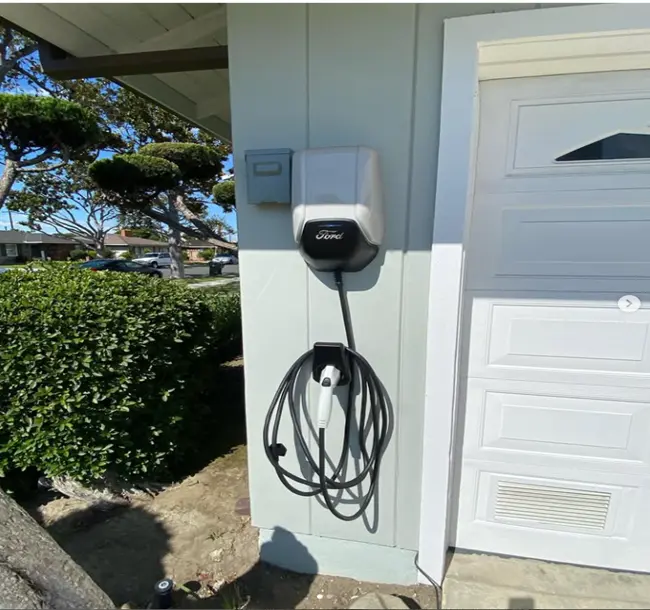
POWER ROUTE ELECTRIC – EV CHARGER INSTALLATION

Charging Capacity
A Level 2 charger generally uses a dedicated 240-volt circuit sized to the unit, with the breaker, conductors, and protection matched to the equipment listing and the length of the run.
Two things drive the work more than anything else: how much room the panel has left, and how far the charger sits from it. A short run inside a finished garage is straightforward. A run across a crawlspace, up an exterior wall, or out to a detached carport adds conduit, penetrations, and sometimes trenching. We measure the route before quoting so the number holds.
Where the panel is full or the service is undersized, capacity work comes first. That is scoped as panel and service upgrade work, and it is the single largest variable in an EV installation estimate.
Location & Compatibility
The plan accounts for where the vehicle parks, cable reach, exposure, wiring route, mounting surface, and the charger’s electrical specifications. Current equipment may use J1772 or NACS connectors; NACS is standardized as SAE J3400.
Mounting position matters more than people expect. A charger set too far from the parking spot forces the cable across a walkway. Set too high or too low and the connector fights the vehicle’s port every time. We look at which side the port sits on, how the car is parked day to day, and whether a second vehicle is coming later.
Outdoor and carport installations add weather, sun exposure, and physical protection to the list. Equipment has to be listed for the location, the enclosure and conduit have to hold up outside, and the mounting has to survive years of the cable being pulled and coiled.
Connector compatibility is usually simpler than it sounds. Most current chargers ship with the connector your vehicle expects or a manufacturer adapter, so the bigger question is almost always the circuit feeding it and whether the panel has capacity. Homeowners planning other work at the same time can start with our residential electrician service.

EV Charging Solutions

Dedicated charging for garages, driveways, carports, and other residential parking locations.

Electrical planning and installation for employee, fleet, or customer charging areas.

Capacity, distribution, routing, access, and shared-parking considerations for apartments and communities.

Review service capacity, panel condition and space, existing demand, and charger requirements.

Plan conductor size, protection, conduit or wiring path, mounting, and distance to the parking location.

Use equipment listed for the location and verify the completed installation and charger operation.
A clear installation plan connects the charger, property, panel, circuit route, permit path, and parking location.
Review parking, panel capacity, existing demand, charger specifications, and the proposed location.
Plan circuit routing, protection, mounting, permit needs, scope, and scheduling.
Complete the circuit and charger connection, test operation, and coordinate inspection when applicable.
Local EV Charger Installation
PowerRoute installs EV charging equipment for homes and properties throughout Pasadena and nearby Greater Los Angeles communities. Share the address, the parking location, and the charger you have or plan to buy, and the team will confirm availability and the right next step.
Coverage includes Altadena, South Pasadena, San Marino, Highland Park, Eagle Rock, Glendale, La Cañada Flintridge, and the surrounding LA County communities. Workplace and fleet charging at business properties is coordinated with our commercial electrician service, and the full range of work is listed under PowerRoute electrical services.
The plan starts with the parking location, electrical system, equipment, and intended use.
We assess capacity and panel conditions before defining the circuit and charger scope.
Wiring, conduit, wall access, exterior exposure, distance, and mounting are reviewed together.
Applicable permit and inspection steps are considered during planning and closeout.
J1772 and NACS/SAE J3400 compatibility is discussed without outdated one-size-fits-all claims.
The completed installation and basic charger operation are checked before closeout.
A site evaluation gives a more useful answer than a flat online price because every electrical system and parking location is different.
Available service capacity, panel space, condition, and possible load-management options affect scope.
Long runs, wall access, conduit, trenching, and parking location can change material and labor needs.
Equipment amperage, protection, listed requirements, mounting surface, and exposure conditions matter.
Permit fees and required panel, service, or distribution changes are property-specific.
Installation Planning
The right installation depends on the electrical system, parking location, equipment, and property conditions.
The existing service, connected loads, panel condition, and breaker space determine available options.
Planning step: review capacity and consider appropriate electrical or load-management solutions.
Distance, wall access, conduit, trenching, and parking placement affect the installation path.
Planning step: choose a practical, code-conscious route before finalizing scope.
Equipment, boxes, fittings, wiring methods, and mounting must suit the installation environment.
Planning step: confirm the charger is listed for the proposed indoor or outdoor location.
Connector type, equipment rating, vehicle acceptance, cable reach, and manufacturer instructions all matter.
Planning step: provide the charger make, model, amperage, and vehicle information.
Distribution, access, assigned spaces, billing, expansion, and property coordination can add project decisions.
Planning step: review present needs and future charging goals before selecting equipment.
Requirements and incentive eligibility can change and depend on the property, equipment, and utility program.
Planning step: verify current official requirements; do not rely on an outdated rebate amount.
Read feedback from customers who chose PowerRoute for electrical installations, upgrades, and problem solving.
Trustindex verifies that the original source of the review is Google.
Albert and his whole team is tremendously great. They have done a few different projects for me which were big and small. Each time I have called them they have responded quickly and with more than fair pricing. From pulling electrical permits from the city to installing GFCI receptacles, Albert does it all.Posted on Google
 Jonathan KingAlbert and his team are very professional in how they handle there work and they always provide me with great service for a fair price. But there attention to detail and professional approach to business is what I appreciate most. Albert and his crew are my go too for all electrical needs weather at my business or home.Posted on Google
 Nicko MoukoianGreat team, Albert and his guys always bring me peace of mind!Posted on Google
 Matthew SaadoI haven’t personally hired PowerRoute Electric for their services, but I’ve worked alongside them on several jobs over the past year and a half before it was out to the public. From what I’ve seen firsthand, they take their work seriously. They show up on time, communicate clearly, and put effort into getting the job done right. Their team is respectful and seems to care about doing things the right way, not just the fast way. They’re not perfect—no company is—but they’ve consistently shown up and done what they said they would, which goes a long way in this line of work. If you’re considering hiring them, based on what I’ve experienced working with them on-site, they’re reliable and professional. I’d trust them on a job of my own.Posted on Google
 Jeronimo CorletoI had an excellent experience with Power Route Electric! From the first call to the final installation, their team was professional, punctual, and extremely knowledgeable. They took the time to explain the process, answered all my questions, and completed the work efficiently and neatly. It’s clear they care about quality and customer satisfaction. I’ll definitely be using them again for future projects and highly recommend them to anyone looking for reliable electrical services!Posted on Google
 Mario MarinI highly recommend Power Route Electric ! Very professional and easy to work with. Albert is always going above and beyond for his clients anything you need he will always be there to help ! 10/10Posted on Google
 Cristian AmbrosioI shopped around for the best rate and service to install two generators. I found Powerroute Electric through a friend and have now referred them to 4 of our friends and neighbors. They are amazing and deliver great service and pricing.Posted on Google
 Ken CollisPower Route was fast, efficient, organized and knowledgeable when working on solving my electrical issues. They went above and beyond by giving us a breakdown of what the cheaper option vs the best solution would look like in terms of cost and long term solution. Power Route was very transparent and delivered high quality work . Fixed our flickering lights, our overload issues, provided a water heater solution and installed 2 car chargers. Everything is working great and we have not had an issue. Would definitely recommend.Posted on Google
 Edwin ReynaHad a great experience working with Power Route. Super professional, punctual, and the quality of work was excellent. They explained everything clearly and made sure the job was done safely and efficiently. Definitely my go-to for any electrical work from now on—highly recommend!Posted on Google
 Guillermo Reyna3 EV Charger upgrades and wiring were completed along with Retrofitting of exterior and interior lighting for our campus was recently completed by PowerRoute Electric. Albert and his technicians were extremely helpful and professional from start to finish. Great communication and punctual. They completed the scope of work on time and we’re very neat during the process. Everyone is happy with the improvements and their work! Thank you PowerRoute Electric for making this a seamless process and working around our schedules to minimize classroom interruptions.Posted on Google
 Sig Del toro
Common questions about EV charger installation in Pasadena
The scope may include panel and load review, charger-location planning, a dedicated circuit, wiring or conduit, required protection, mounting and connection, permit coordination, testing, and an operating walkthrough. Browse the full range of PowerRoute electrical services if the property needs other work at the same time.
Not always. The answer depends on service capacity, panel condition and space, existing demand, charger amperage, and possible load-management options. See electrical panel service and replacement for what a capacity upgrade involves.
Cost varies with circuit distance, routing, charger size, panel capacity, access, trenching, mounting, permits, and required electrical upgrades. An on-site review produces the most reliable scope.
Many new EV charging circuits require permitting and inspection. Requirements depend on the property and scope, so they should be confirmed for the specific installation.
PowerRoute can install many listed Level 2 chargers when the equipment and property requirements are compatible. Provide the charger make, model, rating, and vehicle information when requesting a quote.
J1772 is widely used for AC charging, while NACS is the connector design standardized as SAE J3400 and adopted by a growing range of vehicles and charging equipment. Compatibility may depend on the vehicle, charger, and adapter guidance.
Yes, when the selected equipment is listed for the location and the mounting, wiring, protection, and exposure conditions can be addressed properly.
Yes. These projects may require distribution and capacity review, parking and routing coordination, equipment selection, access planning, permits, and decisions about shared use or future expansion.
Share the property address, parking location, vehicle and charger information, and a photo or description of the electrical panel if available. PowerRoute will help determine the next step.