Multi-meter electrical service installations are a common and often essential requirement for multifamily properties, duplex conversions, and mixed-use buildings throughout Los Angeles. These systems allow each unit within a property to have its own dedicated electrical meter, enabling accurate utility billing, straightforward load management, and full compliance with local building codes and LADWP utility requirements. Whether you’re converting a single-family home into a duplex, renovating a mid-century apartment building, or developing a large multifamily complex, understanding the costs involved in a multi-meter installation is a critical step in your planning process.
The cost of installing a multi-meter system in Los Angeles varies considerably based on several factors: the number of units, the required electrical service size, the type and age of the building, and whether a full service upgrade is necessary. This guide breaks down average costs, key pricing drivers, and what property owners and developers can expect throughout the process.
Why Multi-Meter Systems Matter in Los Angeles
In Los Angeles, most multifamily rental properties are legally required to have separate utility metering for each dwelling unit. This ensures that tenants are billed fairly for their own electricity consumption and removes the burden of utility costs from property owners. Beyond legal compliance, individual metering incentivizes energy conservation among tenants, simplifies property management, and increases the overall marketability of rental units.
From a technical standpoint, a properly designed multi-meter system also protects the building’s electrical infrastructure. By distributing load across individual service panels and meters, you reduce the risk of overloading a single circuit or breaker bank, which is a common problem in older Los Angeles buildings that were originally wired for single-family occupancy or lower electrical demand.
If you’re unsure whether your property requires separate metering or how to bring an existing building into compliance, consulting a qualified commercial electrician is the best first step. A licensed professional can assess your current infrastructure, identify code deficiencies, and recommend the most cost-effective path forward.
Average Multi-Meter Installation Costs
In Los Angeles, multi-meter electrical service projects are typically priced on a per-meter basis, with total project cost scaling based on system size and complexity.
Per-Meter Installation Costs
- Basic meter addition (existing capacity available): $1,200 to $3,500 per meter
- Meter installation with panel modifications: $2,500 to $5,500 per meter
- New meter bank with full system integration: $3,500 to $7,500+ per meter
Lower costs apply when the existing electrical infrastructure can support additional load without modification. Higher costs occur when new panels, feeders, or utility coordination are required. In many cases, older Los Angeles properties will fall into the mid-to-upper range due to aging infrastructure that must be brought up to current NEC and local code standards before new meters can be added.
Total Cost by Building Type
Duplex and Small Conversions (2 to 3 Units)
Estimated total cost: $3,500 to $12,000
For duplex conversions and small multi-unit properties, multi-meter installations are typically the most straightforward. These projects often involve a simple service separation or a small meter bank installation. If the existing electrical system has adequate capacity for both units, minimal additional work is needed. However, if the home was originally wired as a single-family residence, some panel reconfiguration or feeder upgrades may be required before the utility can install individual meters.
Small Apartment Buildings (4 to 8 Units)
Estimated total cost: $12,000 to $35,000
At this scale, projects typically include a full meter bank installation, panel upgrades, and partial rewiring. Many older Los Angeles properties in this range, particularly those built before 1980, require service upgrades to accommodate modern electrical loads. Appliances, EV chargers, HVAC equipment, and in-unit laundry all contribute to higher demand than these buildings were originally designed to handle.
Mid-Sized Buildings (9 to 20 Units)
Estimated total cost: $25,000 to $75,000+
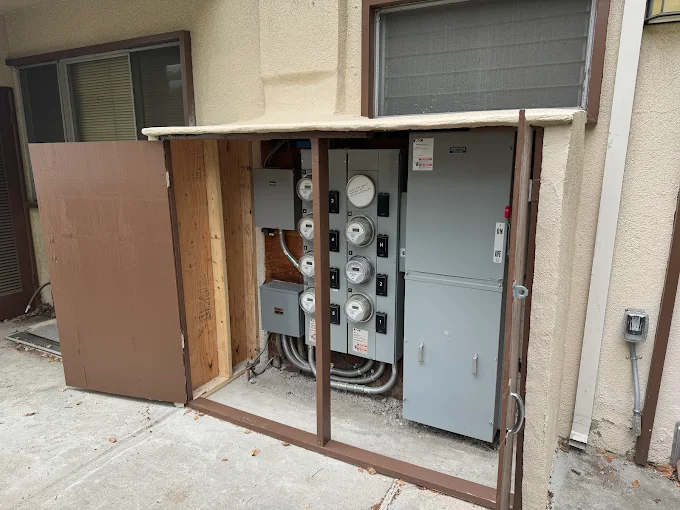
Mid-sized apartment buildings require more complex electrical planning. Projects at this scale typically involve larger meter stacks, upgraded distribution panels, and heavier conductors to handle aggregate electrical demand across all units. Utility coordination with LADWP becomes more involved, and permitting complexity increases significantly. For properties in dense urban areas, underground conduit runs and trenching may also be required, adding cost but providing a cleaner, code-compliant installation.
Large Multifamily Buildings (20+ Units)
Estimated total cost: $60,000 to $150,000+
Large-scale multifamily projects often require switchgear, extensive trenching, transformer upgrades, and major service expansions. At this level, the project is less about meter addition and more about a complete overhaul of the building’s electrical infrastructure. These investments are substantial, but they are often necessary to meet occupancy requirements, satisfy LADWP, and ensure long-term reliability for tenants and property managers alike.
Cost by Electrical Service Size
Electrical service capacity is one of the most significant cost drivers in any multi-meter project. The higher the amperage, the larger and more complex the service infrastructure must be.
200 Amp Service
- Common for duplexes and small multifamily properties
- Estimated cost: $8,000 to $25,000
200-amp service is typically sufficient for 2 to 4 unit buildings with modest electrical demands. If an existing building has a 200-amp single-meter service, it may be possible to split this capacity between two meters, though additional load analysis is required first.
400 Amp Service
- Typical for mid-sized apartment buildings
- Estimated cost: $15,000 to $45,000
400-amp service is the most common configuration for small-to-mid-sized apartment buildings in Los Angeles. It provides enough capacity to support multiple units with modern appliances and HVAC systems. Upgrading from 200 to 400 amps involves replacing the main service entrance, upgrading meter bases, and installing heavier conductors from the utility connection point.
600 Amp and Above
- Used in larger apartment complexes and mixed-use buildings
- Estimated cost: $40,000 to $100,000+
Large residential buildings with high occupancy or commercial tenants may require 600-amp service or greater. These systems involve more extensive utility coordination, larger switchgear, and in many cases a dedicated transformer upgrade coordinated directly with LADWP. If your current system is inadequate for the planned number of units, a complete electrical panel service and replacement will likely be part of the overall project scope.
Per-Unit Cost Estimates
For budgeting and planning purposes, multi-meter installation costs in Los Angeles generally fall into these per-unit ranges:
- Simple retrofit (existing capacity available): $1,500 to $3,000 per unit
- Standard installation with meter bank: $3,000 to $5,000 per unit
- Full upgrade with service expansion: $5,000 to $8,000+ per unit
Per-unit costs may decrease slightly on larger projects due to economies of scale in labor and materials, but only when the existing infrastructure supports the additional electrical load without requiring extensive modifications.
Key Factors That Affect Cost
Number of Units
Each additional meter increases material, labor, and inspection requirements. This includes additional wiring, circuit breakers, meter sockets, and conduit runs. Larger meter banks also require more substantial enclosures and mounting hardware, which adds to both material and installation costs.
Service Upgrade Requirements
If the existing electrical system cannot handle the added load from multiple meters, a full service upgrade is required before new meters can be installed. Depending on the building size and total electrical demand, this can add anywhere from $5,000 to $30,000 or more to the overall project cost. A load calculation performed by a licensed electrician will determine whether an upgrade is necessary and what size service is appropriate.
Meter Bank Configuration
The physical configuration of the meter bank also affects pricing. Surface-mounted meter banks are more cost-effective and are the standard choice for most outdoor installations. Recessed or indoor meter enclosures require additional framing, waterproofing, and labor, which increases the overall cost. In Los Angeles, outdoor-rated meter equipment is standard for most residential and commercial installations due to the mild climate and available wall space on building exteriors.
Trenching and Conduit Work
In dense urban neighborhoods throughout Los Angeles, underground electrical runs are often required to connect meters to the main service point or to route new feeders between buildings on the same parcel. Trenching adds cost due to excavation labor, conduit materials, and surface restoration after the work is complete. Concrete or asphalt cutting and patching can add several thousand dollars to a project depending on the length and complexity of the underground run.
Building Age and Condition
Older buildings are among the most common sources of cost overruns in multi-meter projects. Properties built before the 1970s frequently have outdated wiring, undersized panels, and components that no longer meet current electrical code. Before a commercial electrician can install new meters, these deficiencies must be corrected. In some cases, partial or full rewiring of the building may be required, which significantly increases both the timeline and the budget.
Permitting and Utility Coordination
All multi-meter electrical installations in Los Angeles require permits from the Department of Building and Safety, and the work must be inspected upon completion. Utility coordination with LADWP is also required, particularly for new service connections and large service upgrades. Permitting fees, plan check costs, and the time required for inspections and utility scheduling should all be factored into your project budget and timeline.
What to Expect During the Installation Process
A typical multi-meter installation in Los Angeles follows a structured process that begins with a site assessment and ends with a utility inspection and meter activation.
The first step is a thorough evaluation of the existing electrical infrastructure. An electrician will assess the current service size, panel condition, wiring type, and available capacity. From there, a detailed scope of work is developed, including any upgrades required to support the new meters.
Once permits are pulled and materials are ordered, the installation itself can range from a single day for small projects to several weeks for large multifamily buildings. Work typically includes installing the meter bank enclosure, running new feeders to each unit panel, upgrading the main service if required, and coordinating with LADWP for final connection and meter installation.
After the electrical work passes inspection, LADWP activates each meter and the billing separation takes effect. From that point forward, each tenant or unit is responsible for their own utility account and consumption.
Summary
Multi-meter electrical service installation costs in Los Angeles depend heavily on project scale, electrical capacity, building age, and site conditions. Small duplex conversions may cost a few thousand dollars when existing infrastructure is adequate, while large multifamily upgrades can exceed six figures when full service expansion and switchgear are involved.
For accurate pricing, a site inspection is required to evaluate existing infrastructure, load capacity, and utility requirements. If you are planning a multi-meter project, working with a qualified commercial electrician from the start will help you avoid surprises, stay on budget, and ensure the work is completed to code. In cases where the main service is inadequate, a complete electrical panel service and replacement may be necessary as part of the overall project.
To learn more or schedule a site assessment, visit the PowerRoute Electric multi-meter service page.
Talk to an Electrician for a Multi-Meter Cost Estimate
Multi-meter electrical projects vary significantly based on building size, existing electrical capacity, and the number of units involved. Because of this, accurate pricing cannot be determined without a proper on-site assessment of your electrical system.
At PowerRoute Electric, we evaluate the full scope of your building’s electrical infrastructure before providing a detailed cost breakdown. This includes service capacity, meter stack requirements, panel condition, and any necessary upgrades to meet current Los Angeles electrical code.
Whether you are planning a duplex conversion or upgrading a larger apartment building, we help you understand:
- Estimated cost per meter based on your building type
- Total project cost based on service amperage and unit count
- Whether a service upgrade is required
- Any additional costs related to trenching, panels, or utility coordination
The goal is to give you a clear and realistic cost expectation before construction begins, so there are no surprises during installation or inspection.
Request a Multi-Meter Electrical Estimate
Call PowerRoute Electric at (818) 200-6572 to schedule an assessment of your property and receive a detailed estimate for your multi-meter electrical service project in Los Angeles.